zero women
A more complete picture of a groundbreaking post-war period in art
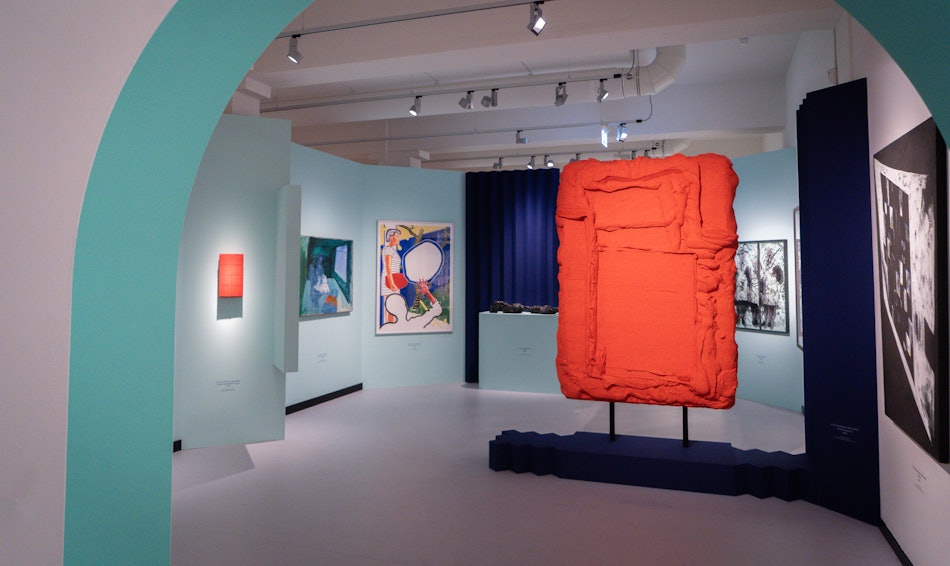
From 12 December 2026 to 23 May 2027, museum van Bommel van Dam presents zero women. This is the first exhibition devoted to women artists of the 1960s and 1970s working within and beyond Nul and ZERO. This radically innovative movement is primarily associated in art history with male artists. The Dutch Nul group had no female members. And the canon of the international ZERO movement features only men - with the exception of the global phenomenon Yayoi Kusama.
Yet women played an important role in this groundbreaking period in art. Until now, their role has remained underexposed. zero women shows that there were indeed women artists - both within and outside the official networks - who experimented with simplicity, monochrome, new materials and interaction with the public. In doing so, their work closely aligned with the principles of Nul and ZERO.
The exhibition presents work by Yayoi Kusama, Nanda Vigo, Maria van Elk, Ferdi, Loes van der Horst, Dadamaino, Corrie de Boer, Marja de Boer Lichtveld, Marianne Aue, Wil Fruytier and Ria van Eyk. Work by various male artists associated with the Nul group and ZERO movement is also on display, including Lucio Fontana, Jan Schoonhoven, Heinz Mack and Henk Peeters.
A new, experimental visual language
The ZERO movement emerged at the end of the 1950s from a desire for a new, experimental visual language. Centred around the German artists Heinz Mack and Otto Piene, an international network developed from Düsseldorf. This network rejected the personal, expressive art of the previous generation. Its members focused on simplicity, repetition, rhythm, monochrome, light and new, often industrial materials. The relationship with the public was also redefined: through performances, happenings and spatial installations, art was no longer simply viewed, but directly experienced. The movement soon gained a foothold in the Netherlands, where artists Armando, Jan Henderikse, Henk Peeters and Jan Schoonhoven founded the Nul group.
The major innovative influence of both movements is primarily attributed to male artists. There is now a growing awarenessthat this picture is incomplete. Women made important and innovative contributions. The fact remains, however, that they did not always receive the recognition they deserved. zero women brings these artists into view and contributes to a broader and more nuanced understanding of art history.
Frans and Marja de Boer Lichtveld, Spiegelkolom Drie Elementen, 1973, On loan from the artist. Photo: Adriaan van Dam


Women innovators
zero women presents work by international artists associated with ZERO who exhibited in the Netherlands. Among them were Marianne Aue, Dadamaino, Yayoi Kusama and Nanda Vigo. Vigo was also active as an exhibition organiser for the movement. She played an important role in presenting the work of ZERO artists throughout Italy. The exhibition also features Dutch innovators who were not part of Nul or ZERO, but whose work was based on comparable principles.
Wil Fruytier elevated weaving into a spatial medium, Corrie de Boer combined rhythm and linear patterns with the tactility of textiles, and Ferdi gave the female body and sexual emancipation a place within the same experimental tradition. In doing so, they not only built on Nul and ZERO's transgressions of boundaries, but also added new dimensions of their own.
Nanda Vigo, Trigger of the Space, 1974, Galleria Vinciana. Photo: Aldo Ballo, courtesy Archivio Nanda Vigo
Wil Fruytier. Photographer unknown
Corrie de Boer. Photo: Rob Bogaerts, Nationaal Archief / Anefo
Ferdi in the Wombtomb, 1968. Photo: Shinkichi Tajiri
Soft Living Room
A special place in the exhibition is reserved for Maria van Elk's black-and-white Soft Living Room (1968/2013). This work is not a sculpture simply to be looked at, but a concept of shelter and comfort that visitors can enter. They can take a seat among soft mounds of faux fur, foam and artificial silk, transforming from spectator into participant. An important source of inspiration for the artist was Yayoi Kusama; Van Elk attended several of her performances.
The iconic Soft Living Room was recreated in 2013 at the request of Stedelijk Museum Schiedam and can now be experienced by a new generation.
Maria van Elk, Soft Living Room, 2013, Collection Stedelijk Museum Schiedam. Photo: Aad Hoogendoorn


Kusama in Holland
During the run of zero women, the documentary Kusama in Holland (2026) will be screened in the Auditorium at museum van Bommel van Dam. This film by Memphis Features explores the period Yayoi Kusama spent in the Netherlands in the 1960s, where she connected with the Nul group. Using unique archive material, anecdotes from eyewitnesses and insights from art historians, the documentary brings this important period in Kusama's artistic career to life.


Greater attention to women and underrepresented artists
The collection of museum van Bommel van Dam includes work by Nul artists Armando, Jan Schoonhoven and herman de vries. In this respect, it reflects the male perspective that for many years shaped the narrative of experimental art in the Netherlands in the 1960s and 1970s. Since 2023, the museum has been actively pursuing a more inclusive policy, with greater attention to women and underrepresented artists. zero women and recent long-term loans of work by Corrie de Boer are testament to this commitment.
Yayoi Kusama paints Jan Schoonhoven, Schiedam 1967. Photo: Ton de Haan, collection 0-INSTITUUT
Frans and Marja de Boer Lichtveld in the studio, 1976. Photographer unknown
Loes van der Horst. Photo: Rob Croes, Nationaal Archief / Anefo
Ria van Eyk. Photographer unknown
Publication and loans
The exhibition is accompanied by a richly illustrated publication from the 0-INSTITUTE, featuring in-depth background articles and artists' biographies by Tim Ackermann, Antoon Melissen, Catrien Schreuder and Tijs Visser.
zero women was created in collaboration with the 0-INSTITUTE. The exhibition would not have been possible without the generous loans from the BPD Art Collection, Centraal Museum, Foundation Nanda Vigo, Museum Morsbroich, Museum Voorlinden, Rueb Modern & Contemporary Art, De Rijk Fine Art, the Cultural Heritage Agency of the Netherlands (RCE), Stedelijk Museum Schiedam, TextielMuseum, Von der Heydt Museum, ZERO foundation, 0-INSTITUTE and several private collectors. The museum is deeply grateful for their support.
Nanda Vigo, Cronotopo, 1963, ZERO foundation, Düsseldorf. Photo: ZERO foundation


zero women is made possible with the support of:











More exhibitions
- Exhibition
![DSC9209]()
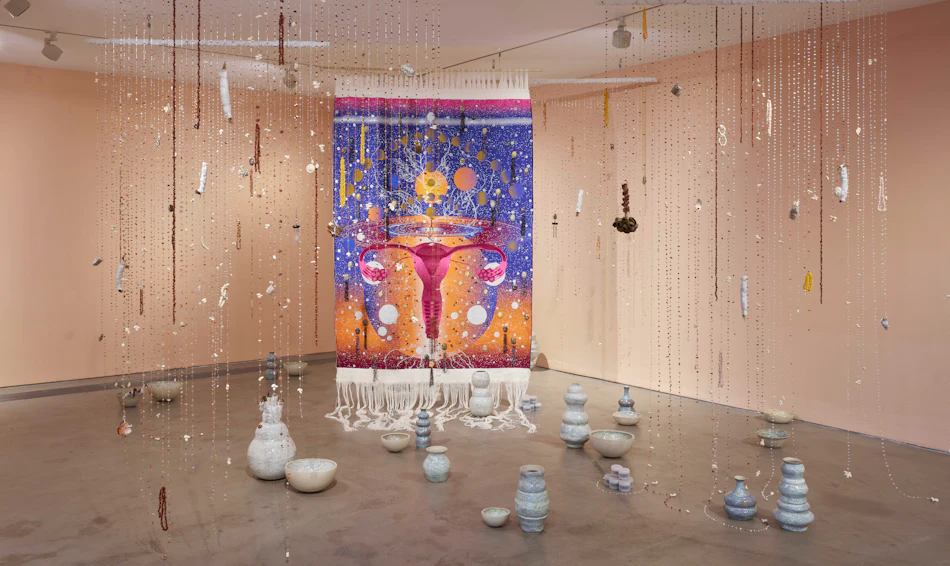
Material Memories
3 October 2026 up to and including 7 March 2027
First Dutch solo exhibition by international rising star Marie-Claire Messouma Manlanbien - Exhibition

![Flute II]()
Seeing Sounds
4 July 2026 up to and including 22 November 2026
Four artists from different generations for whom music is inextricably linked to freedom - Exhibition
![VBVD2025 DWAR Sdoordecollectie 014]()
DWARS door de collectie
Always on display
Always on display: CROSSING through the collection