Seeing Sounds
On music and freedom
With the exhibition Seeing Sounds, museum van Bommel van Dam presents the work of four artists from different generations for whom music is inextricably linked to freedom: personal, political and artistic. Sedje Hémon, Sam Middleton, Dion Rosina and Raafat Ballan show that music is not only a subject, but also a method and a form of resistance. In their work, they weave together musical elements such as composition, improvisation, sampling and ensemble playing to imagine freedom, identity and connection.
A dialogue between generations on art, music and freedom
Although Hémon, Middleton, Rosina and Ballan come from different generations and cultural backgrounds, they share the same conviction: that music can offer both inspiration and a method through which social, political and artistic boundaries may be crossed. Seeing Sounds brings their variations on this theme together in one exhibition, making the role of music in the four oeuvres palpable and revealing striking affinities between them. The work of the four artists shows how music, from jazz to hip hop, becomes a visual language through which freedom can be made tangible.


Sedje Hémon (1923-2011), who after returning from the concentration camps was no longer physically able to play the violin, developed a unique method for performing abstract art as a musical composition. Her painting-compositions form an under-recognised chapter in Dutch art history. Her contemporary Sam Middleton (1927-2015), who grew up in Harlem, New York, and later worked in the Netherlands, translated the rhythms and improvisations of jazz into collages and paintings. His work evokes both African-American culture and the struggle for civil rights. Decades later, Dion Rosina (1991) draws in a comparable way on the sample culture of hip hop: he reuses existing images to create space for stories and communities that have long been ignored. In the paintings of Raafat Ballan (1990), musicians play a crucial role. For him, music is a social practice: something that brings people together and creates space for meaning and connection.
Seeing with eyes and ears
Seeing Sounds invites visitors to experience the work of Hémon, Middleton, Rosina and Ballan in dialogue with sound. Four listening stations with carefully selected vinyl records make the musical worlds of the artists audible. Visitors can browse, choose, listen and discover how music changes the way they look at the artworks.
Uniquely, several of Sedje Hémon's paintings have actually been performed as musical compositions. A selection of these performances, chosen especially for the exhibition, can be heard there. In this way, a broad audience can gain insight into Hémon's vision that abstract painting and music speak the same language.


Public programme: listening, making, experiencing
The public programme accompanying Seeing Sounds is aimed at children, young people and adults, and explores the interweaving of sound, image, identity and freedom. Alongside the listening stations, workshops, talks, performances and educational projects make the exhibition a multisensory experience.
The public programme also includes a collaboration with Muziekgebouw aan 't IJ for the cultural festival Zomerparkfeest. In this participatory programme, festival visitors translate artworks into sound using SoundLAB's unique instruments: from DJ tools to extraordinary instruments from different cultures.
Talent development: an immersive sound installation
Nieuwe Helden Next Level (NHNL) is a community for young people and emerging makers in Limburg who are developing their talent within hip hop culture. In collaboration with the museum, NHNL is developing a new sound installation that builds on the themes of the exhibition. This installation translates Seeing Sounds into a spatial listening experience in which visitors themselves become part of a collective composition.
The sound installation will be developed over the course of the exhibition and can be experienced in the museum from September. The collaboration connects the exhibition with contemporary makers working at the intersection of art, sound and social imagination.


Sedje Hémon - paintings that sound the way they look
The Jewish-Dutch painter and composer Sedje Hémon (born Sedje Frank, 1923-2011) trained as a violinist and regarded music as her deepest calling. During the Second World War she became involved in the resistance and was betrayed. She survived Auschwitz by playing in the camp orchestra established by the SS. The physical consequences of her imprisonment made it impossible for her to play the violin after the war. Hémon, however, found a new way to express her musicality: not through the instrument, but through painting.
The abstract works she developed are built up from precisely calculated compositions of lines, planes and colours that can be read and performed as musical scores. Her oeuvre forms a rare example of a fully developed system, which Hémon called her 'integration method', in which visual art and music converge.
Hémon's work has been rediscovered in recent years, but deserves a firmer place in the canon. The exhibition underlines this by presenting an extensive overview of paintings and linocuts from the 1950s and 1960s.


Sam Middleton - jazz as a visual language
Sam Middleton (1927-2015), of whose work museum van Bommel van Dam now holds the largest collection in the Netherlands thanks to a recent donation, brought the energy of the African-American neighbourhood of Harlem with him to Europe. In his collages, he combined found materials, from concert programmes to musical scores, into compositions that echo the spontaneity and rhythm of jazz. With these 'improvised solos', the artist gave visual form to what jazz meant to him: a language of movement, dialogue and cultural exchange. His work is an expression of the freedom he had had to fight for in his country of birth.
In recent years, international appreciation for Middleton's paintings and collages has grown again, as demonstrated by acquisitions and presentations by institutions including Centre Pompidou and the Stedelijk Museum. Seeing Sounds marks the next step in this development.


Dion Rosina - sampling as a method
The Afro-Caribbean-Dutch painter Dion Rosina (1991) is drawn to forgotten stories, mythologies and lives that have been kept outside official histories. From these, he selects images, from archival material to historical photographs, which he edits and combines into new compositions.
The key to his work is the concept of the sample, borrowed from hip hop. A producer takes a fragment from an existing track and incorporates it into a new production, creating a conversation between different traditions and generations. Rosina applies this method to images. By appropriating existing images and placing them in a new context, he claims a narrative space that has long been denied to ignored communities. His work, for which he won the Royal Award for Modern Painting 2026, connects with current debates on heritage, representation and power.


Raafat Ballan - ensemble playing
The powerful, figurative paintings of Syrian-Dutch artist Raafat Ballan (1990) are rooted in his own experiences of migration and in the question of what role culture plays when the world around you changes radically. Music is of great importance in this. His figures, singing, playing or depicted in silence without an instrument, reveal the human need for rhythm, community and meaning. For Ballan, music is not only a personal expression, but a social practice: something that brings people together and creates space for meaning and connection.
The ensemble playing of musicians is a form of collectivity for which he also longs as an artist. Ballan's paintings can therefore be read as a plea for the studio as a place of collaboration rather than solitary isolation.


Seeing Sounds is made possible with support from:




More exhibitions
- Exhibition

![Nanda Vigo Trigger of the Space 1974 Galleria Vinciana Foto Aldo Ballo courtesy Archivio Nanda Vigo]()
zero women
Verwacht 12 December 2026 up to and including 23 May 2027
On the important but under-recognised role of women during a period of radical innovation in the arts - Exhibition
![DSC9209]()
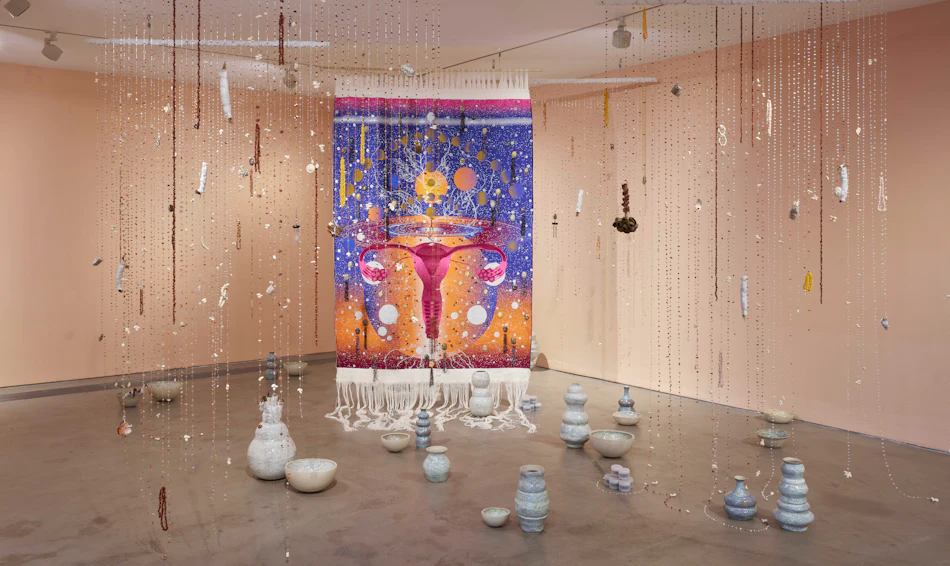
Material Memories
3 October 2026 up to and including 7 March 2027
First Dutch solo exhibition by international rising star Marie-Claire Messouma Manlanbien - Exhibition
![VBVD2025 DWAR Sdoordecollectie 014]()
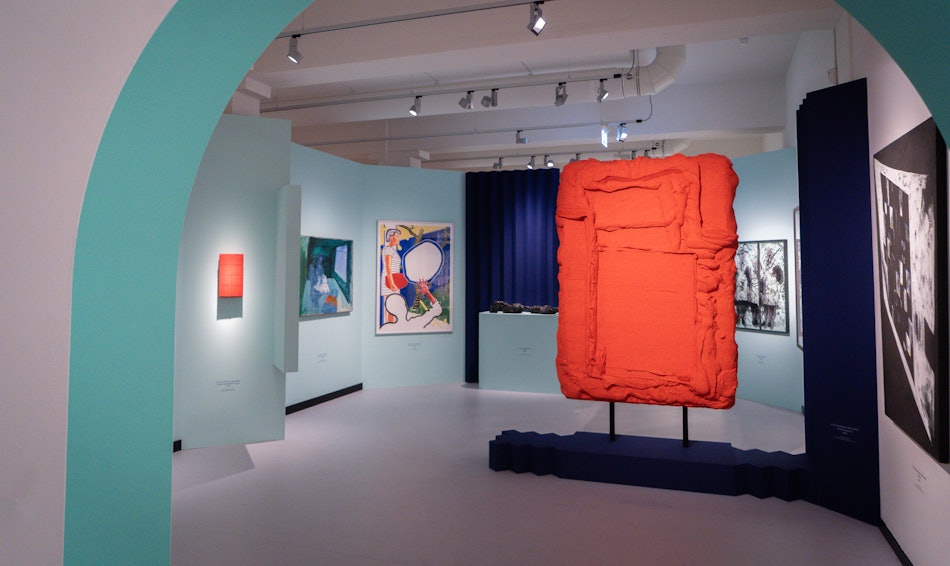
DWARS door de collectie
Always on display
Always on display: CROSSING through the collection